Safe homes, strong families: Kimberley housing report reinforces the need for change

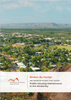
Drawing on the experiences of 166 tenants across 22 Kimberley communities and towns, the report provides another powerful body of evidence about the housing conditions Aboriginal people and families are navigating across our region.
MWRC acknowledges KCLS for undertaking this important work and, particularly, the tenants and community members who shared their experiences.
For us in the Fitzroy Valley, however, the issues raised by the report are not abstract.
They are deeply connected to the work we do every day with women, children and families.
Housing is a family safety issue
MWRC has long argued that safe, secure and appropriate housing must be understood as fundamental social infrastructure for the Fitzroy Valley.
Through our Strengthening Families programs, we work alongside women and families experiencing family and domestic violence, crisis, legal issues and complex social pressures.
Again and again, housing sits underneath those challenges.
A woman cannot make a meaningful choice to leave violence if there is nowhere safe for her and her children to go.
Families cannot easily recover from crisis when they return to overcrowded or unsuitable housing.
Children's safety, health and wellbeing are affected when families do not have stable homes.
And when housing supply is inadequate, the pressure does not remain contained within the housing system. It flows through families, community services, health services, schools, the justice system and organisations such as MWRC.
That is why housing cannot be treated simply as a matter of property management.
It is a family safety issue, a health issue, a children's wellbeing issue and an essential part of building stronger communities.
Kimberley voices must shape the response
One of the strengths of Broken by Design is that it brings the experiences of Kimberley tenants into the centre of the conversation.
KCLS is calling for a shift towards a more preventative, locally delivered and community-accountable approach to housing maintenance.
That principle matters.
Too often, remote communities experience systems designed elsewhere, delivered from a distance and measured against settings that do not reflect the realities of life in places such as the Fitzroy Valley.
Better housing outcomes will require investment, but investment alone is not enough.
Aboriginal communities and Aboriginal community-controlled organisations need a meaningful role in designing solutions, determining priorities and shaping how investment is delivered locally.
Local organisations understand families, communities, Country and the practical consequences when systems fail. That knowledge should be treated as an asset in designing a better housing system.
From evidence to action
The release of Broken by Design adds to an already compelling case for change.
For MWRC, the challenge now is to ensure that evidence translates into action: more safe and appropriate homes, better maintenance of existing housing, stronger local capability and long-term investment shaped with communities rather than for them.
This is particularly important as MWRC looks at the longer-term future of the Fitzroy Valley and the infrastructure required for families not simply to respond to crisis, but to thrive.
Housing is central to that future.
We congratulate Kimberley Community Legal Services on bringing this work together and thank the many Kimberley tenants who contributed their experiences.
Their voices should be heard not simply as evidence of what is going wrong, but as a call for governments and partners to work differently.
For the women and families MWRC works alongside, the principle is straightforward:
Safe homes help create safe families. Strong housing helps create strong communities. And lasting solutions must be built with Aboriginal communities at the centre.
- Marnin Admin