Welcoming visitors, sharing knowledge and strengthening partnerships in the Fitzroy Valley

These visits are valuable opportunities to share the work happening across MWRC, strengthen partnerships and ensure that the experiences and priorities of Aboriginal women, children and families in remote Communities are reflected in the decisions that affect their lives.
Bringing national economic policy conversations to the Fitzroy Valley
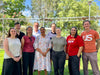
MWRC recently welcomed a delegation from the Commonwealth Economic Inclusion Advisory Committee (EIAC), an independent body providing advice to the Australian Government on economic inclusion and disadvantage.
Our CEO, Emily Carter AM, is a sitting member of the Committee, bringing an important perspective from the Fitzroy Valley and the Aboriginal community-controlled sector to national policy discussions.
The visit provided an opportunity for Committee members to hear about the realities of life in remote communities, including the interconnected challenges of housing, cost of living, access to services, employment opportunities and family wellbeing.
For MWRC, economic inclusion is about much more than income alone. It is about ensuring women and families have the resources, opportunities, safety and support they need to participate fully in community life.
Visits like these help connect national policy discussions with the lived experiences of people in Communities such as Fitzroy Crossing, where the impacts of government decisions are often felt most directly.
Connecting government leaders with community priorities
We were also pleased to welcome Senator Sue Lines, President of the Australian Senate, Federal Minister for Social Services Tanya Plibersek, and Member for Kimberley Divina D'Anna.
The visit provided an important opportunity to showcase MWRC's integrated approach to supporting women, children and families, and to discuss the challenges and opportunities facing communities across the Fitzroy Valley.
Through our Strengthening Families, Baya Gawiy and Marulu programs, MWRC works across family violence prevention, legal assistance, healing, early childhood development and social and emotional wellbeing.
Our work demonstrates why locally designed, culturally informed and Aboriginal community-controlled services are so important, particularly in remote communities where families can face significant barriers to accessing essential supports.
We value opportunities to engage directly with government representatives and to demonstrate the importance of sustained investment, genuine partnerships and policies that respond to the realities of remote Australia.
Learning together through our Early Years Community of Practice
Alongside these visits, MWRC's Baya Gawiy team has been involved in an Early Years Community of Practice, bringing together educators and professionals committed to improving education and care experiences for Aboriginal children, families and staff.
The Community of Practice fosters collaboration and knowledge sharing between Baya Gawiy Early Childhood Learning Unit, NBY HIPPY, Ngunga Group Women's, Marninwarntikura and other invited early years services.
It provides a valuable space for educators and practitioners to share their experiences, reflect on practice, learn from one another and strengthen relationships across organisations.
At the heart of this collaboration is a shared commitment to culturally safe, high-quality early childhood education that recognises the importance of language, culture, family and community in children's learning and development.
These relationships are essential to building a strong early years sector that responds to the needs and aspirations of Aboriginal children and their families.
From conversations to meaningful change
At MWRC, we believe there is enormous value in bringing people to the Fitzroy Valley to see our work firsthand.
Our Community has extraordinary strengths, knowledge and leadership. It also faces challenges that cannot always be fully understood through reports, statistics or meetings held thousands of kilometres away.
When policymakers, government representatives and service providers spend time in community, listen to local voices and see how Aboriginal community-controlled organisations work, it creates opportunities for more informed decisions and stronger partnerships.
But the real value of these visits is what happens afterwards.
We hope our guests return home with a deeper understanding of the Fitzroy Valley, the strengths of our people and the importance of backing community-led solutions with the resources and long-term commitment they deserve.
MWRC extends a sincere thank you to all our visitors, partners and participating organisations for making the journey and contributing to these important conversations.
We also acknowledge our dedicated staff, Community members and local leaders who continue to share their knowledge, welcome visitors and demonstrate the strength of Aboriginal community-controlled services.
We look forward to continuing these relationships and working together to translate conversations into meaningful and lasting change for women, children and families across the Fitzroy Valley.
- Marnin Admin