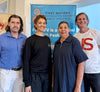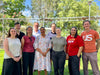
Standing Together: MWRC Joins National First Nations Family Violence Conference in lutruwita

The conference brought together Aboriginal and Torres Strait Islander community-controlled organisations, legal practitioners, advocates and sector leaders from across Australia, united by a shared commitment to preventing domestic, family and sexual violence and strengthening safety, healing and justice for First Nations people.
For MWRC, the gathering was an important opportunity to reconnect with colleagues, share experiences from the Kimberley and contribute to national conversations about the future of Aboriginal community-controlled family violence services.
Strengthening our collective voice
Across two days, the conference provided space for important discussions about the challenges facing First Nations women, children and families, and the critical role of community-controlled organisations in responding to violence.
The program included contributions from Domestic, Family and Sexual Violence Commissioner Micaela Cronin and National Commissioner for Aboriginal and Torres Strait Islander Children and Young People Sue-Anne Hunter, alongside legal practitioners, advocates and representatives from First Nations organisations across the country.
Sessions explored trauma-informed practice, legal service delivery, sector leadership and opportunities to strengthen collaboration and advocacy.
A particularly valuable part of the conference was hearing directly from fellow member organisations about their work, the challenges they face and the approaches being developed within their communities.
Despite the different circumstances of remote, regional and urban communities, many of the issues confronting our sector are shared. These include barriers to accessing justice, the need for culturally safe services, workforce pressures and the importance of sustainable investment in Aboriginal-led solutions.
Gatherings like this remind us that our organisations are part of a much broader movement for safety, justice and self-determination.
Bringing the Fitzroy Valley perspective to national conversations
MWRC was pleased to contribute to the member presentations, sharing our experiences of delivering integrated family violence prevention, legal and family support services across the Fitzroy Valley.
Our contribution highlighted two important areas of work: our advocacy for access to justice in remote communities and our Us Without Abuse campaign.
For families living in remote communities, access to justice can be shaped by geography, transport, service availability and decisions made far from the communities they affect.
MWRC continues to advocate for a justice system that recognises these realities and ensures Aboriginal women and families can access the protection, legal assistance and support they need, regardless of where they live.
Our Us Without Abuse campaign demonstrates the importance of community-led prevention, bringing women, men, children and families together to challenge violence, strengthen respectful relationships and create safer futures.
Sharing this work with colleagues from across Australia provided an opportunity to contribute to collective learning while also hearing how other communities are responding to similar challenges.
Learning from one another, standing alongside each other
One of the greatest strengths of the First Nations family violence sector is the knowledge, experience and leadership held within our communities.
Across Australia, Aboriginal community-controlled organisations are developing responses grounded in culture, relationships, community accountability and a deep understanding of the families they serve.
These approaches are not interchangeable, and each community must have the authority to determine what works for its own people.
But there is enormous value in coming together, sharing what we have learned and supporting one another to advocate for the changes our communities need.
The conference reinforced the importance of strong national representation through FNAAFV and the collective voice of Aboriginal and Torres Strait Islander organisations working to end family violence.
It also provided opportunities to strengthen professional relationships, share practical approaches and recognise the extraordinary commitment of colleagues working in challenging circumstances across the country.
With gratitude to our hosts
MWRC extends its sincere thanks to First Nations Advocates Against Family Violence for organising the conference and creating a valuable space for connection, learning and collective advocacy.
We also warmly thank our colleagues at SiS Tasmania for their welcome and hospitality in nipaluna.
We acknowledge the Traditional Custodians of lutruwita and pay our respects to Elders past and present. We are grateful for the opportunity to gather, learn and share on Aboriginal Tasmanian Country.
To our fellow member organisations, speakers, advocates and colleagues, thank you for the generosity with which you shared your knowledge, experiences and perspectives.
Continuing the work together
The challenges facing First Nations women, children and families require more than isolated programs or short-term responses.
They require sustained commitment to Aboriginal community control, culturally informed prevention, accessible justice systems and the right of our communities to lead solutions that reflect their own needs and aspirations.
As our team returns to the Fitzroy Valley, we carry with us new insights, strengthened relationships and a renewed appreciation of the collective leadership across our sector.
We look forward to continuing our work alongside FNAAFV and our colleagues across Australia, advocating for the resources, recognition and systemic change needed to build safer futures for our people.
Our communities may be separated by thousands of kilometres, but our commitment to safety, justice, healing and self-determination brings us together.
- Marnin Admin